
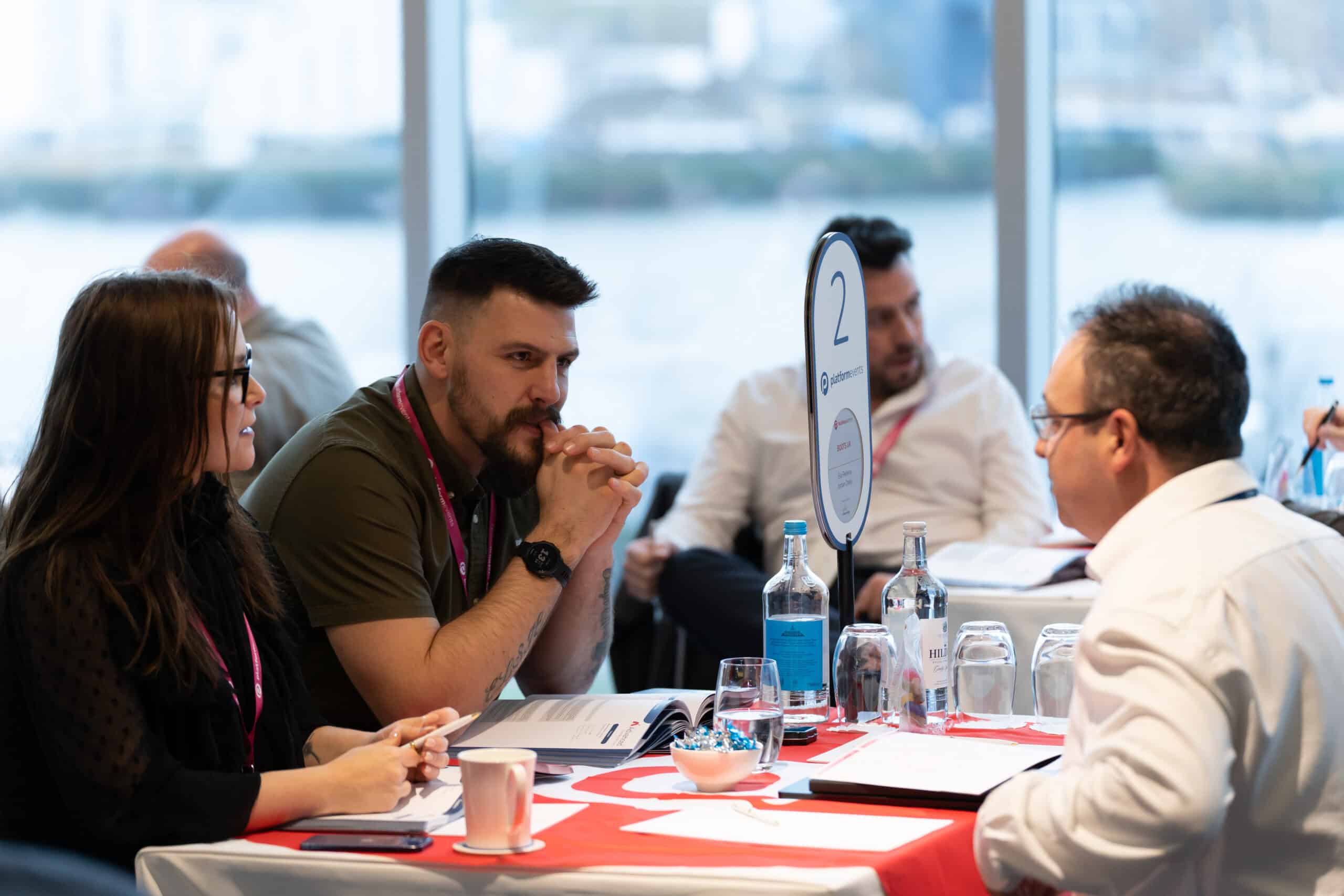
When budgets and schedules are tight and someone asks why the event is worth it, knowing your ROI is crucial.
In Forrester’s 2026 research on B2B events, more than 90% of organisations said audience acquisition, maximising event data and proving impact were priorities.
So, how do you measure the impact? In this blog, we’ll go through a step-by-step process for measuring the ROI.
Why event ROI is harder than it looks
Events rarely produce a neat, one-off return. A buyer might meet a supplier in March and sign in September. A supplier might win a small order straight away and a much larger one a year later.
Forrester notes that for over half of organisations, net-new lead generation is the primary goal, which it warns risks undervaluing brand and relationship benefits. If you only count immediate leads, you can miss most of the value.
So the key is to measure a few things well, across different time horizons.
Step 1: Decide what success looks like (before you go)
Write down one to three goals. Make them specific.
For buyers: Decide what you need to solve, choose the suppliers you most want to see from your schedule, and decide how many suppliers you’d like to aim to take forward to a quote or tender.
For suppliers: Look through your matched buyers before the event and pick the handful most likely to buy (for example, 5 out of 20 meetings). Find out what each is looking for, then set a goal such as scheduling a follow-up call with a set number of them.
If you can’t say what success would look like, you won’t be able to measure it afterwards.
Step 2: Track the right numbers (during the event)
A simple spreadsheet works perfectly!
- Meetings you had
- Quality of each conversation, scored 1 to 3
- Specific next steps agreed, with a name and a date
- Total cost: ticket, travel, time and, for suppliers, any showcase stand or sponsorship costs
At a format built around pre-matched, one-to-one meetings, the first number is easy to capture because your schedule is the record. That’s a real advantage over events where much of the value comes from chance conversations you may not remember.
Step 3: Follow up and record outcomes (after the meetings or the event)
Every attendee gets the event directory, with each person’s company, details, products and photo, so you don’t need to start from scratch. Use it as your record: after each meeting, note the outcome and the agreed next step against that person, and highlight the ones you want to follow up on. Aim to do this within a week, while the conversations are fresh.
Then review at three points:
- 1 week: Were the follow up sent?
- 3 months: Which conversations became quotes or tenders?
- 12 months: What was signed?
Step 4: Calculate a simple return
Here’s a basic formula:
Event ROI = (value of business won or saved − total cost) ÷ total cost
For buyers, “value” can include savings against current pricing and the staff time saved by meeting several suppliers in one day. For suppliers, use the first-year gross profit from new accounts.
Be honest about the limits. Not everything turns into a number. Add a line for qualitative benefits, such as market insight, relationships, shortlists and a second supplier as backup, so you aren’t unfairly judging a good event on one metric.
Common mistakes to avoid
- Setting no goals. Without a target, any result looks fine or any result looks poor.
- Forgetting the hidden costs. Staff time is often the biggest expense.
- Judging too early. A three-month sales cycle can’t be measured in week two.
- Not recording the data. If notes stay in your notebook, they don’t count.
Putting it into practice
If you’re planning your next event, choose your goals now, set up your tracking sheet and block time in the calendar for the one-week and three-month reviews. It takes less effort than it sounds, and it gives you real evidence for next year’s budget conversation.
Platform Events brings buyers and suppliers together for a day of pre-matched, one-to-one meetings, which makes the numbers easy to track and the next steps easy to follow up on.
Find out more about the next Platform Events event and build your measurement plan before you arrive.